
Seychelles
Natural hazards are becoming more frequent and severe in Seychelles as climate change progresses.
Climate displacement in Seychelles
Natural hazards are becoming more frequent and severe in Seychelles as climate change progresses. Coastal degradation, limited water resources and biodiversity loss increase vulnerability, with climate-sensitive economic sectors, food security and health especially affected.
RE2CLID works with national authorities and the Indian Ocean Commission on displacement-sensitive disaster risk management. A Technical Implementation Package for Seychelles was not included in the source pack, so this summary uses the cluster Description of the Action.
Summary drawn from the Cluster 2 Description of the Action. The country TIP is not yet in the source pack.
What RE2CLID will do
District profile summary
Districts (admin-2) in the RE2CLID action areas, with the seasonal hazards and peak-pressure months from their action-area calendar. CVA results will be added as each district analysis is completed.
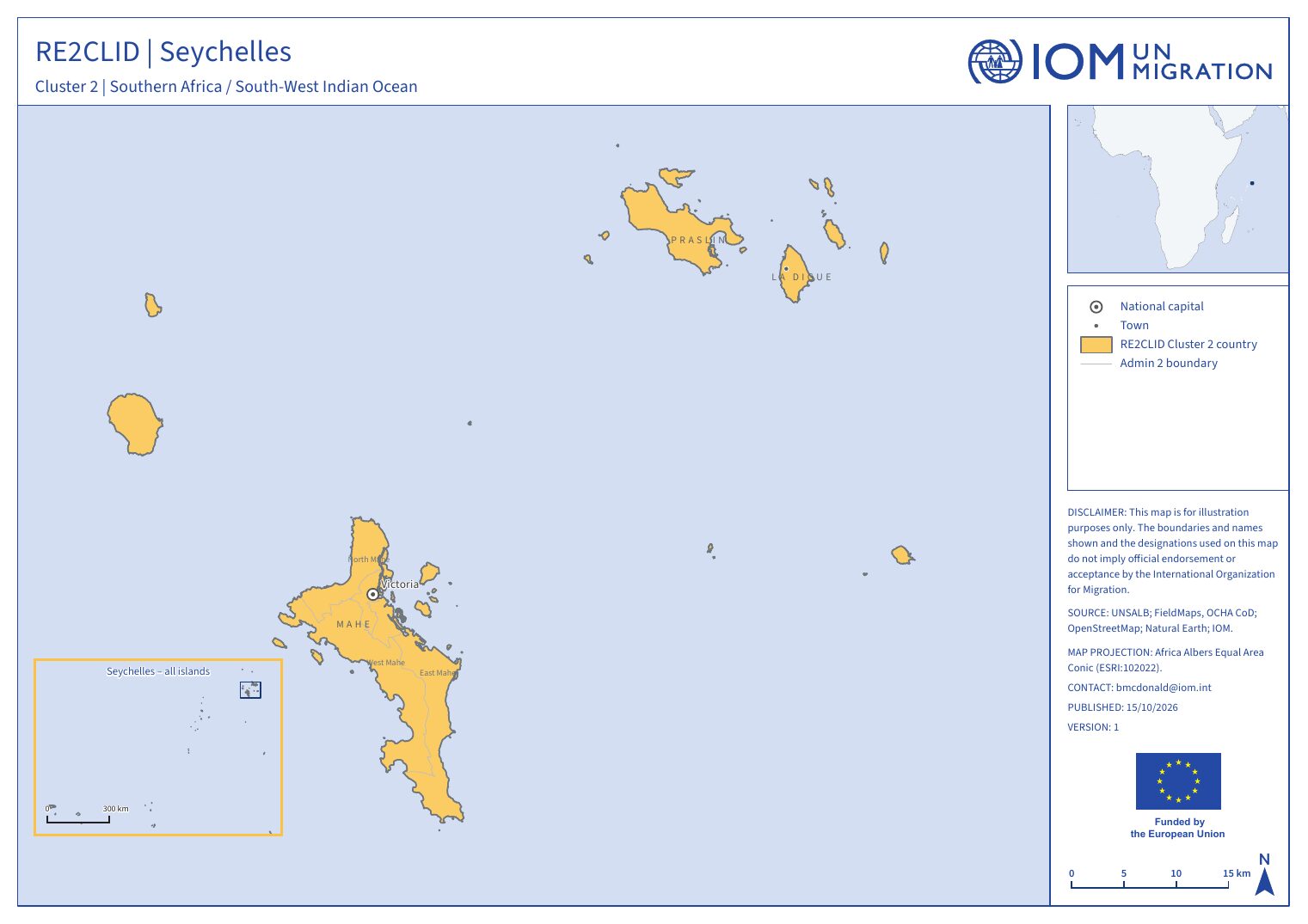
Seychelles action areas
Seasonal calendar
Recurring seasonal hazards, agricultural seasons, lean periods and outbreaks. Switch between the national calendar and each action area, and use the chips to filter categories.
Seychelles country analysis
The country CVA applies the common methodology with national data and partners. It runs multi-hazard displacement vulnerability and risk assessments, and its results feed into risk-informed preparedness, DRR and adaptation planning at national and sub-national levels.
Questions the country analysis will answer
- Which districts and communities are most exposed to the main seasonal and sudden-onset hazards?
- How do socio-economic vulnerability and adaptive capacity differ between action areas?
- How can results be built into national DRM, early warning and anticipatory action systems?
Analytical dimensions
- 1Hazard
Sudden-onset (floods, cyclones, landslides) and slow-onset (lake-level rise, drought, degradation) - 2Exposure
People, settlements, infrastructure and livelihoods in hazard-prone areas - 3Vulnerability
Socio-economic sensitivity, disaggregated by sex, age and disability - 4Adaptive capacity
Services, institutions, social protection and coping strategies - 5Displacement risk
Combined likelihood and scale of disaster displacement
Outputs for Seychelles
- Analysis report · Quarto web pagePending
- Summary brief · PDFPending
- Briefing slides · Quarto Reveal.js slidesPending